
 EN
EN
Quick Links
For brand owners and importers building a private-label electrical line, certification is a market-access decision, not a checkbox. The difference between UL vs cETL and what cULus certification actually grants determines which markets you can legally sell into and how smoothly your goods clear customs and inspection. This article gives technical buyers a clear framework to read electrical fittings certification marks correctly and to choose an OEM electrical fittings manufacturer whose listings match every destination market.
All three are recognized by U.S. and Canadian authorities, but they are issued by different Nationally Recognized Testing Laboratories (NRTLs).
The key point for importers: a product listed by either UL or ETL is accepted by AHJs—what matters is that the mark is genuine, the file is current, and the specific product category is covered.
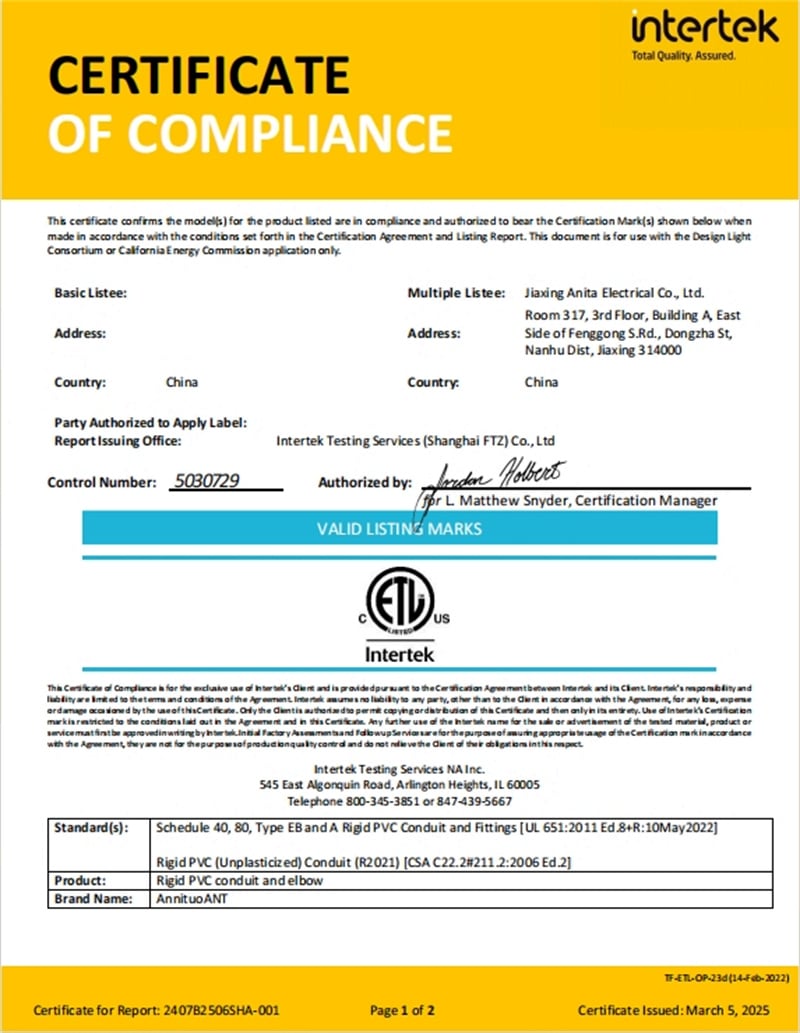
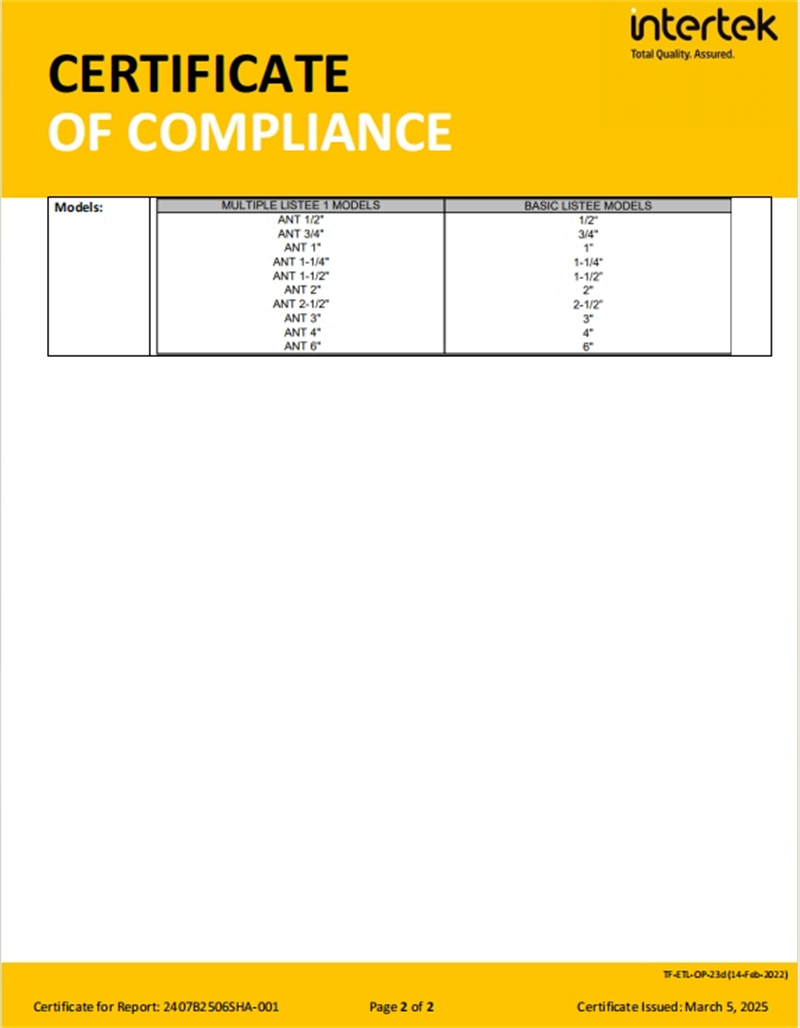
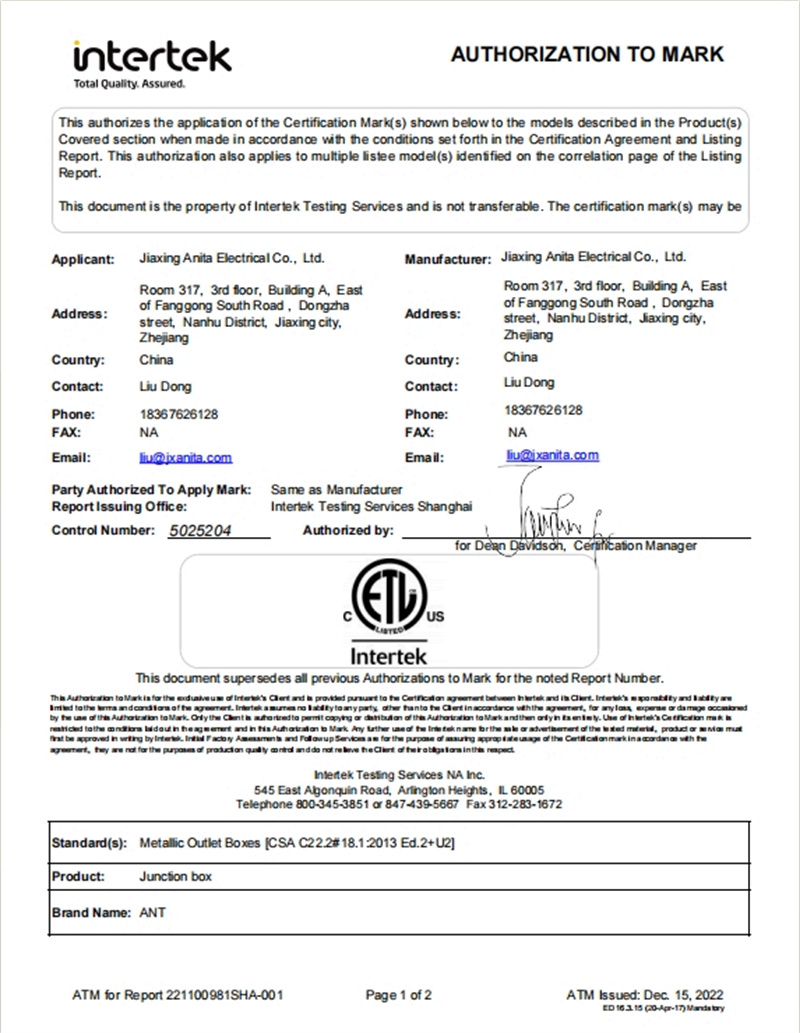
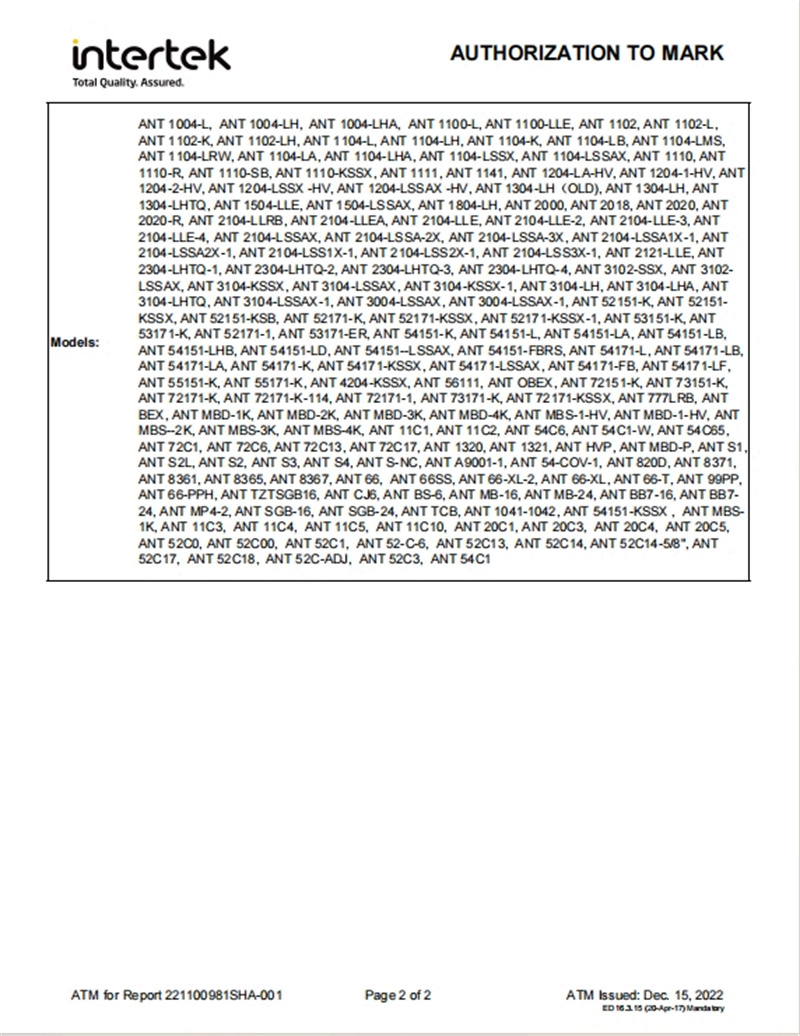
Counterfeit or "self-declared" marks are the most common compliance trap in low-cost sourcing.
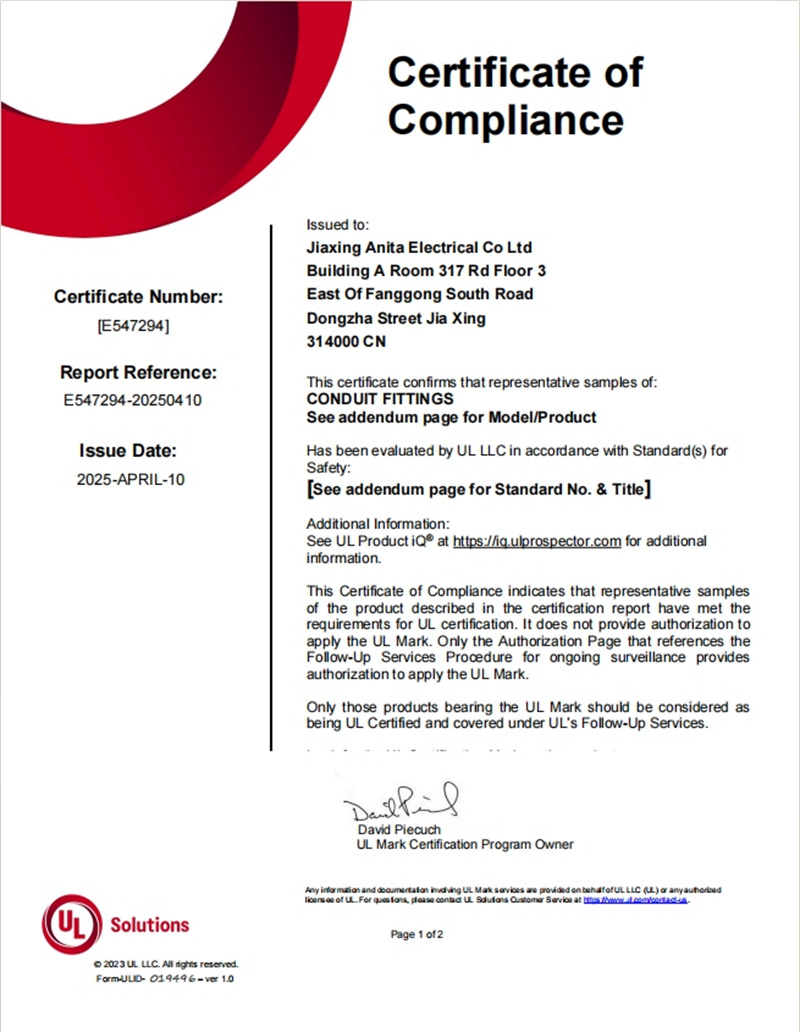
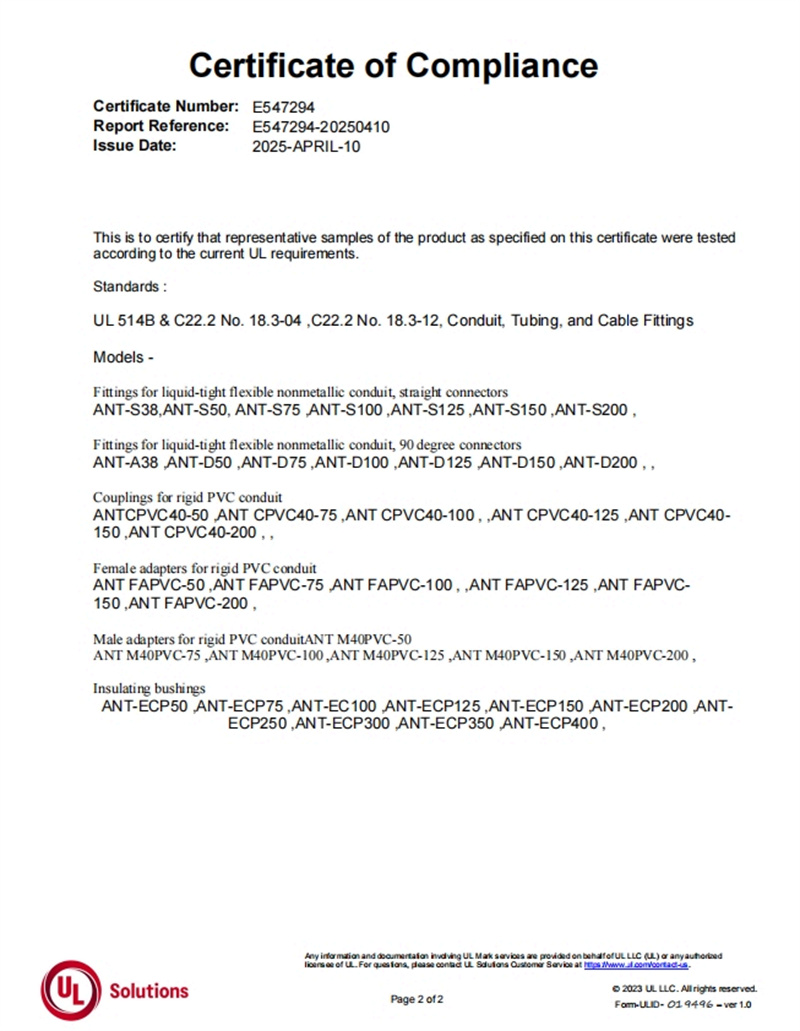
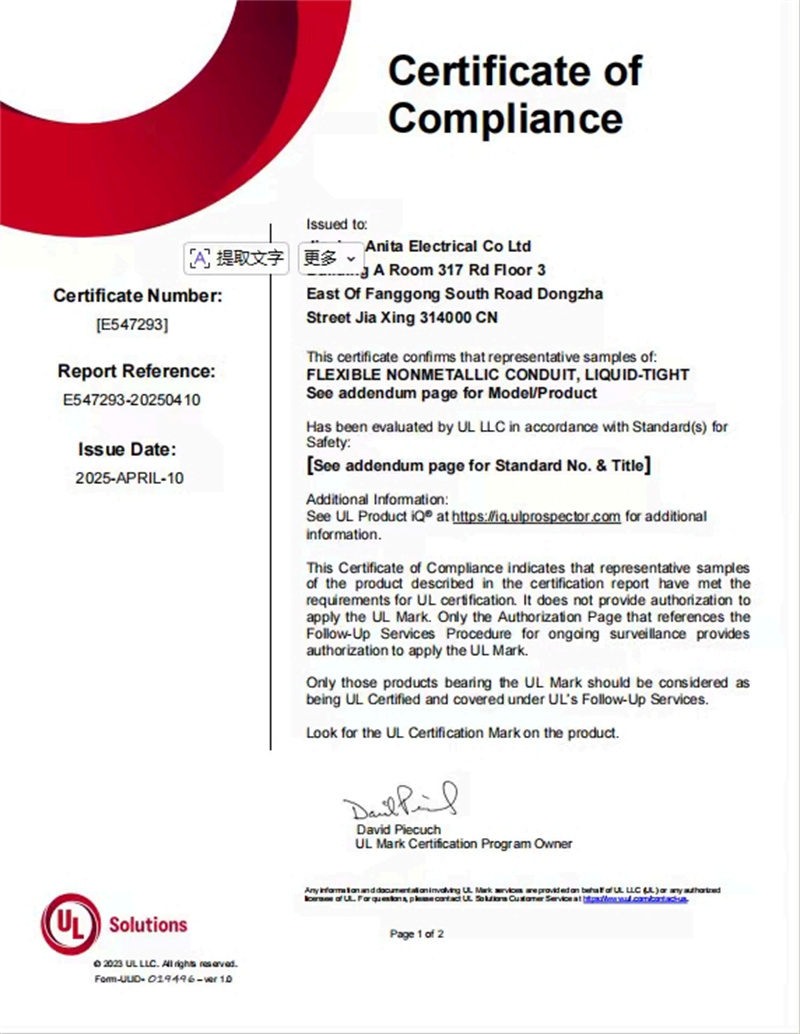
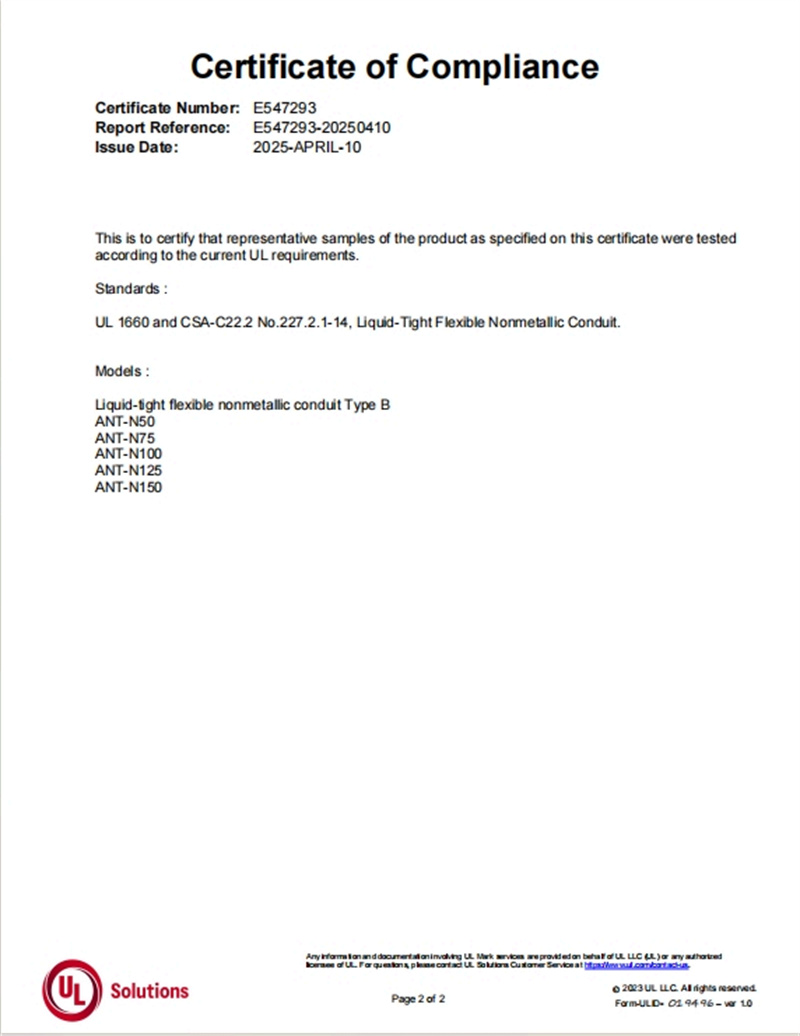
A manufacturer such as Jiaxing Anita Electrical maintains multiple UL files across product categories—for example, conduit fittings, electrical metallic tubing fittings, outlet bushings, and liquid-tight nonmetallic conduit—with corresponding Canadian listings, which is what a genuine multi-category compliance program looks like.
|
Aspect |
UL |
cULus |
cETL |
ETL |
|
Issuing body |
UL |
UL |
Intertek |
Intertek |
|
U.S. acceptance |
Yes |
Yes |
Yes |
Yes |
|
Canada acceptance |
Separate cUL |
Yes (built in) |
Yes |
Separate ETL |
|
Where to verify |
UL Product iQ |
UL Product iQ |
Intertek Directory |
Intertek Directory |
|
Best for |
U.S.-only lines |
U.S.+Canada lines |
Either market |
U.S.-only lines |
For a private-label program selling into both the U.S. and Canada, a cULus or paired UL+cUL/cETL listing is the cleanest path—one document set, two markets.
When you commission OEM electrical fittings, certification responsibility and brand marking must be agreed up front: whose file the product ships under, how your logo is applied, and which categories are covered. Trust signals worth confirming include a documented onsite supplier assessment, Trade Assurance coverage, and a verifiable export history into your target markets. These reduce both your compliance exposure and the risk of a customs hold.
Three takeaways: (1) UL, cULus, and cETL are all accepted—verify the file number, don't trust the logo alone; (2) for dual U.S./Canada sales, choose cULus or paired listings to simplify documentation; (3) confirm OEM certification and branding terms in writing before tooling.